Added to cart
−
+

Vitamin C is one of the best-studied molecules in dermatology – with three clearly documented effects on the skin. But what is often overlooked: the formulation determines whether it works.
Vitamin C is the same molecule we take in through fruit and vegetables to stay healthy. But what is absorbed orally reaches the skin in only very small quantities. Applied directly as a serum, it acts where it is needed. Here are its three most important effects.
Every day, free radicals form in the skin – from UV radiation, environmental pollution, and normal metabolic processes. These free radicals damage cells and tissues and accelerate skin aging. Antioxidants neutralise free radicals before they cause harm. Vitamin C is one of the most important antioxidants in the skin. It acts synergistically with vitamin E, which enhances and prolongs its effect. Applied in the morning, it forms an effective first line of defence against oxidative stress – together with sunscreen.
I like to describe the skin this way: the epidermis is the tablecloth, and the dermis is the table beneath it. The skin’s structure – its firmness, its resilience – is not defined by the tablecloth, but by the table. And that table consists largely of collagen. Collagen, in turn, requires vitamin C to maintain its structure. Certain steps in the formation of collagen fibres are simply not possible without vitamin C – the collagen remains unstable. This mechanism explains why vitamin C, together with vitamin A, ranks among the most important long-distance runners of skincare.
Vitamin C inhibits an enzyme involved in pigment production. This gives it a balancing effect on uneven pigment distribution – it does not lighten the skin, but homogenises the complexion. An effect that niacinamide also achieves – though through a different mechanism: in the case of niacinamide, by inhibiting melanosome transport; in the case of vitamin C, by inhibiting pigment synthesis itself.
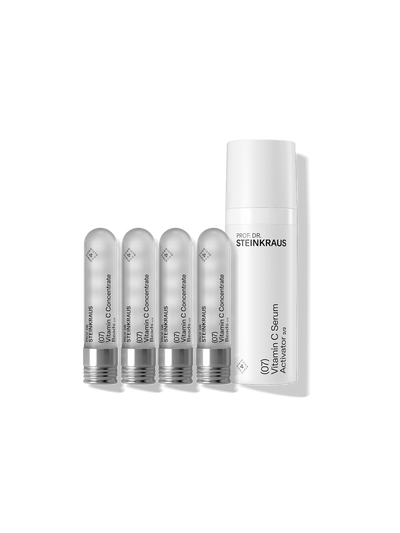
Vitamin C is a highly complex, exceptionally sensitive molecule. It oxidises as soon as air or light reaches it – recognisable by brownish discolouration. And oxidised vitamin C is ineffective. This is precisely the problem with vitamin C creams: as soon as the product is opened, the molecule is exposed to air and light. In my experience, vitamin C in creams does not work. I know many companies that have tried repeatedly – and ultimately withdrawn the product from the market. Vitamin C can only be effective when freshly activated immediately before use. A dual-chamber serum, where this is ensured, is a particularly effective solution.
Vitamin C is – like vitamin A – a long-distance runner. It takes weeks and months to take full effect. Used correctly – in a stable, freshly activated form – it is a central building block of any thoughtful skincare routine.