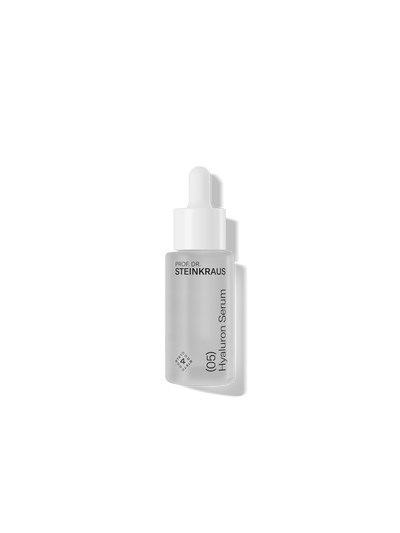
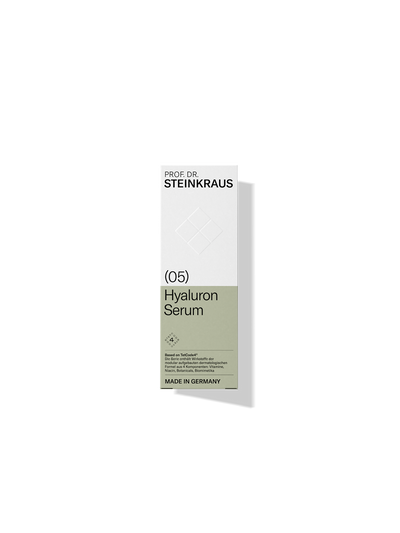
Added to cart
−
+

Hyaluronic acid is one of the best-known actives in skincare – and one of the most widely misunderstood. What it can do is impressive. What it cannot do, few people understand.
Hyaluronic acid does not rejuvenate. It does not build collagen, does not improve skin structure, does not restore degraded fibres. Those who expect that from it are expecting the wrong thing – and will be disappointed. Hyaluronic acid is, above all, one thing: an exceptionally effective humectant.
One gram of hyaluronic acid can bind up to one litre of water. Applied to the skin, it binds moisture in the uppermost skin layer – the skin looks temporarily plumper, smoother, fresher. It reflects light more evenly. It simply looks better. This effect – this glow – is real. But it does not last long. After one to two hours it wears off, as the bound moisture is lost again. No lasting result, no sustained structural change. It is a temporary but very effective state.
I often describe hyaluronic acid as the sprinter of skincare. Fast, effective, immediately visible – but only over a short distance. The long-distance runners are vitamin A and vitamin C. They work more slowly, taking weeks and months to show results. But they work on structure: vitamin A promotes cell renewal and collagen synthesis; vitamin C stabilises collagen and acts as an antioxidant. These are the actives that change the skin over time.
Hyaluronic acid does not do that.
The biggest mistake is applying hyaluronic acid with the wrong expectations. The second biggest is not applying it at all. As a humectant, it belongs in almost every skincare routine. In the morning, under your daytime moisturiser; in the evening, after your actives. And for those who need a quick, visible effect: hyaluronic acid applied an hour before an important appointment – the effect is immediately visible. The skin looks plumper, more radiant, fresher. For one to two hours, you have that glow. No more – but no less either.